Planning approval leads for builders in NSW: how to reach owners the day approval lands
An approved development application is one of the cleanest buying signals in residential construction. It means a homeowner has decided to build, has had plans drawn, has paid the lodgement fees, and has cleared council. The project is funded, the address is known, and the work is about to begin.
For a builder, a renovator, or any of the trades that follow the main build, that is a far stronger lead than someone clicking an ad or posting on a comparison site. The only question is who reaches the owner first.
Why a DA or CDC beats a shared lead
Most builder lead channels in NSW share one weakness: by the time the lead exists, the homeowner is already shopping. They have posted on hipages, Oneflare or Airtasker, and the same job is sold to three to five other businesses. You are competing on speed and price from the first phone call.
A planning approval is different. At the moment a DA or CDC (complying development certificate) is determined, the homeowner is at the start of the project, not the end of the search. Their architect or certifier is done. Their builder may not be locked in. Every downstream trade is still an open slot:
- Excavation and earthworks
- Concreting and driveways
- Fencing and retaining walls
- Landscaping and turf
- Pool fencing on approved pools
- Decking, pergolas and outdoor structures
- Arborists, where trees are flagged for removal or works
The advantage is timing, not contacts. Reaching a funded project before the owner starts collecting quotes is worth more than another shared lead in the same auction.
What a planning approval actually tells you
When a development is approved in NSW (through a council DA or a CDC issued by a certifier), the public record includes:
- The property address
- The development type (new dwelling, alterations and additions, secondary dwelling, pool, demolition, and so on)
- The estimated cost of works
- The determination date
- The council or certifying authority
The homeowner's name, phone and email are not public, and they should not be. You do not need them. The development type and address tell you whether the job is relevant to your trade and whether it is in your patch. That is enough to act on.
How many approvals are there?
Across greater Sydney, the NSW ePlanning Portal records a large and steady flow of residential approvals every month, spanning new dwellings, additions, secondary dwellings and ancillary works like pools and demolition. Volume varies sharply by council and by suburb. Some high-growth corridors see dozens of relevant approvals a month for a single trade; quieter pockets see a handful.
That variation is the whole point of checking before you commit. A channel that produces forty letters a month in one builder's territory might produce six in another's. You should know your number before you decide it is worth your time.
How a builder reaches the owner
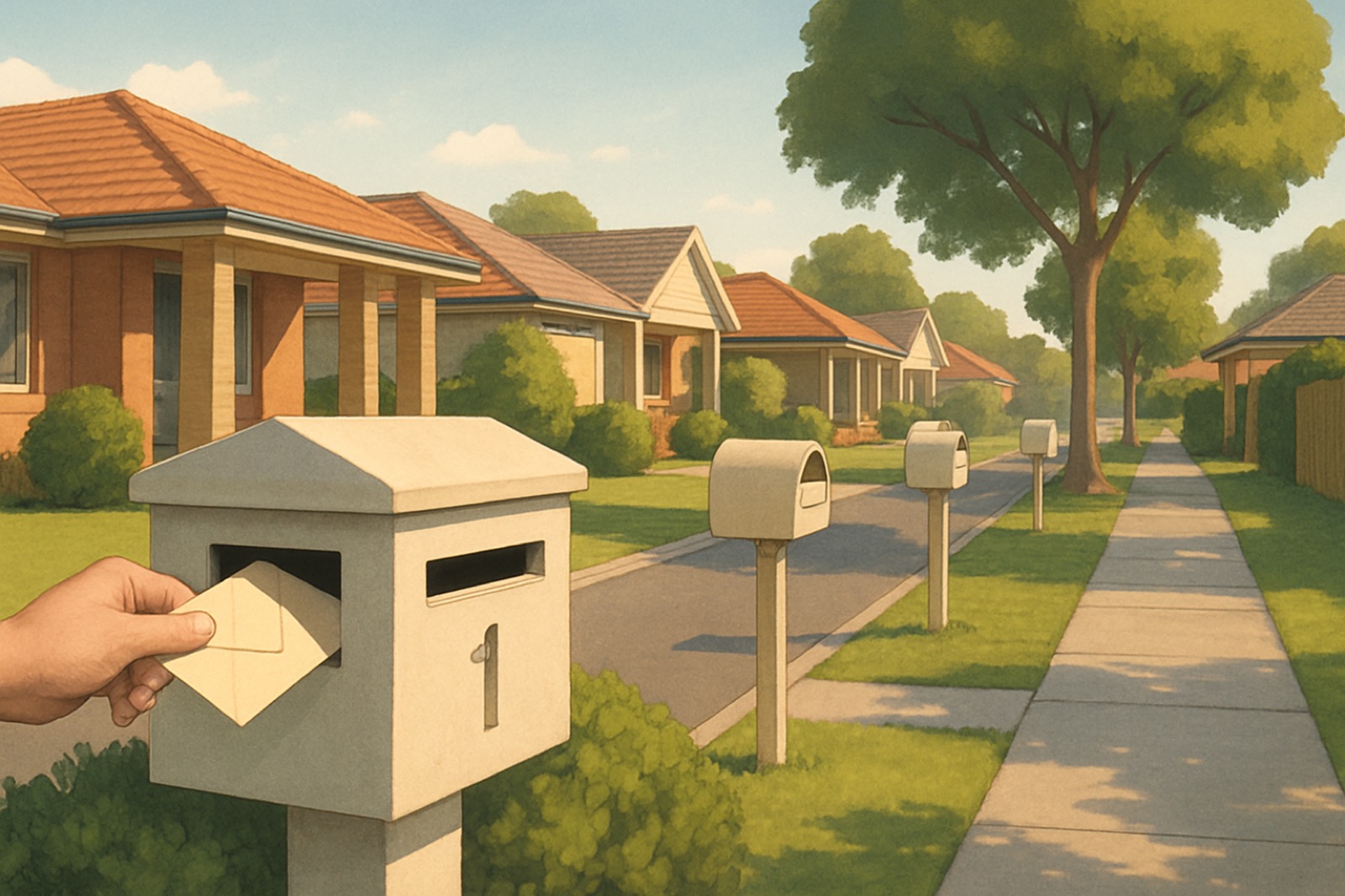
Since the contact details are not public, the channel is a physical letter addressed to the property, in your business name and branding. This is standard, legal direct mail. Done well, a builder's letter:
- Names your business and trade clearly, with your logo
- References that you noticed their recent approval, without over-explaining how
- States exactly what you do and the area you cover
- Gives one clear way to get in touch, usually a phone number
- Fits on a single page and reads like it came from a real local business
The response is often warm, because the timing is right. The owner has just had a project approved and knows trades are coming. A relevant, professional letter arriving without them having to search is a convenience, not an interruption.
The case for automating it
Working the planning portal by hand is possible, and almost nobody does it consistently. It means logging in daily, filtering by council and approval stage, working out which approvals are relevant to your trade, then writing, printing, stamping and posting a letter for each one. When you are on the tools all day, it does not happen.
LeadPost runs the full loop for you: a daily scan of NSW public planning data (DA + CDC, CC BY 4.0), classification by trade, a branded letter generated in your name, and print and post within 24 hours of the approval appearing. Letters come in prepaid credit packs — from $5/letter (Starter: 50 letters/$400, Standard: 150/$1,000, Growth: 800/$4,000). No subscription, no lock-in. Credits never expire. We send one letter per home per trade niche, so you are not competing with another builder who bought the same lead from us. One won build or downstream job typically covers the cost of a full pack many times over.
Before any of that, the free sample report shows how many relevant approvals landed in your suburbs over the last 30 days. You see the real volume for your trade and territory first, then decide.